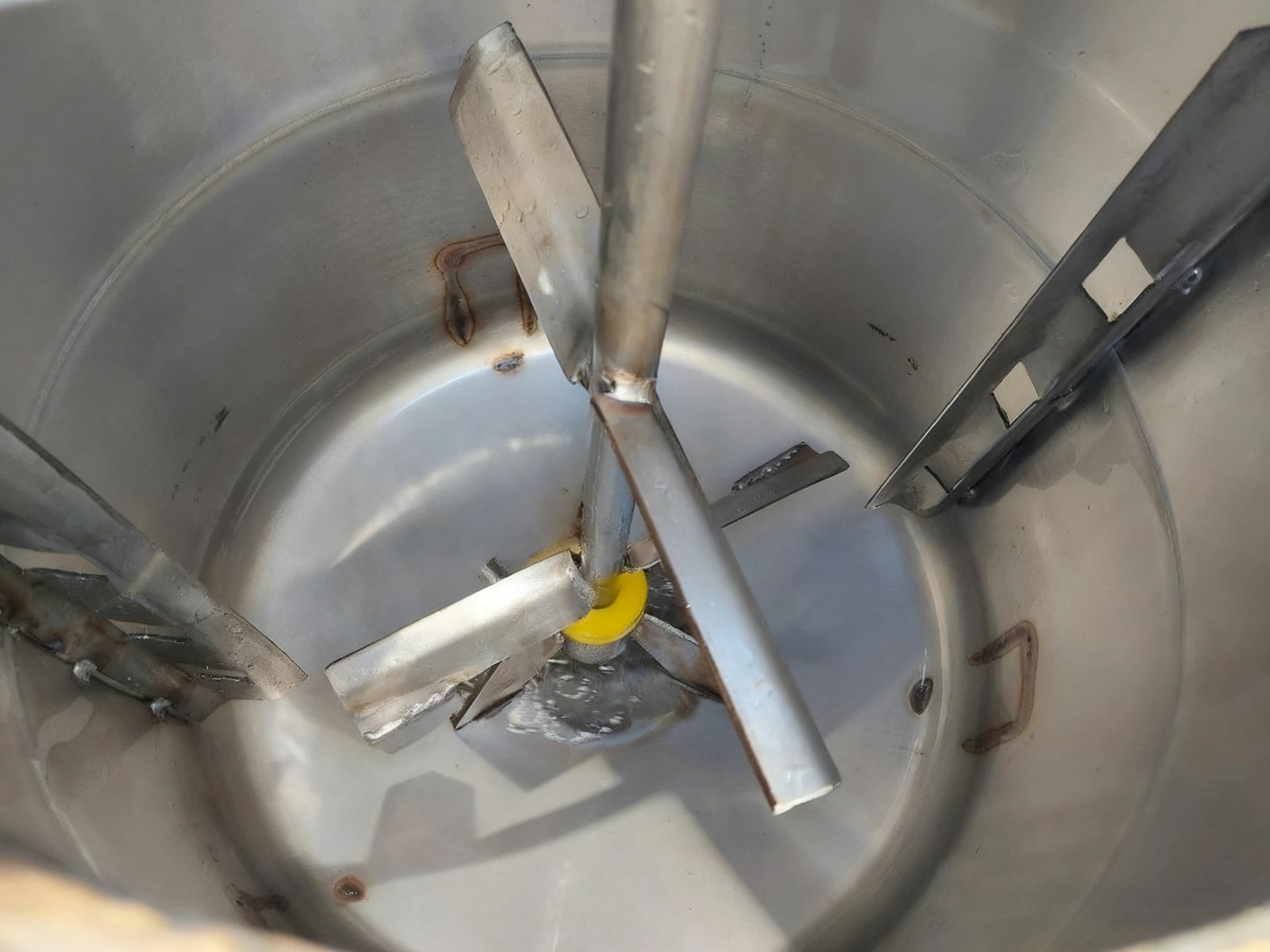
Author: Site Editor Publish Time: 11-10-2025 Origin: Site
Stainless steel mixing tanks are widely used in various industries such as pharmaceuticals, chemicals, food and beverages, etc., which helps maintain the consistency of the final product quality. This article introduces the basic knowledge of stainless steel mixing tanks from their definition, basic components, working process and types, enabling you to have a better understanding of them.
What is the stainless steel mixing tank
A stainless steel mixing tank is a container used for mixing, blending, homogenizing, emulsifying, or fusing two or more liquids, solids, and other operations. Its working principle is to achieve material mixing and blending through the rotation of the stirring blades.
Basic components of stainless steel mixing tank
Before understanding the process, let's take a brief look at the basic components:
Tank body material: Made of 316/304 stainless steel, it has good corrosion resistance.
Mixing Components: including motor, reducer, mixing shaft, and mixing blade.
Heating/cooling Components (optional): such as jacket or coil.
Temperature and pressure control system (optional)
Auxiliary components such as discharge port, feed port, manhole, sight glass, etc.
Workflow of stainless steel mixing tank
The following is the basic workflow of a stainless steel mixing tank, which can be simply divided into 6 steps. Three of the steps may vary depending on the material you are handling:
Feeding:
Add liquid raw materials, powders, or additives in proportion to the tank.
Heating/Cooling (optional):
If the equipment is equipped with a jacket, the material can be heated or cooled by steam or cooling water.
Mixing and stirring:
Start the mixing device to thoroughly mix, dissolve, or disperse the materials to achieve a uniform state.
Emulsification/Homogenization (optional):
For materials that require high uniformity, start a high shear emulsifier or homogenization system for refinement.
Insulation and reaction (optional):
Maintain the set temperature and complete the reaction or maturation process for a certain period of time.
Discharge:
After mixing is completed, the product is transported to the next process or storage tank through a bottom valve or pipeline.
Simplified flowchart
Feeding→ Heating/Cooling (optional) →
Mixing and stirring → Emulsification/Homogenization (optional) → high shear mixing emulsification → Insulation and reaction (optional) → discharge

The mixing effect of stainless steel mixing tanks depends on factors such as the shape of the mixing blades, mixing speed, and tank size. When choosing a stainless steel mixing tank, it is necessary to select the appropriate mixing tank according to the specific mixing task.
Types and functions of classic mixing tanks
Here are some common types of stainless steel mixing tanks:
Divided by mixing method:
1. Paddle mixing tank (the most widely used type of tank), such as mixing tank, temporary storage tank, etc
2. Frame stirring (used for products with high viscosity), such as yogurt fermentation tanks
3. Scraper type mixing tank is mainly used for jacket tank materials that require heating or cooling and have a relatively high viscosity.
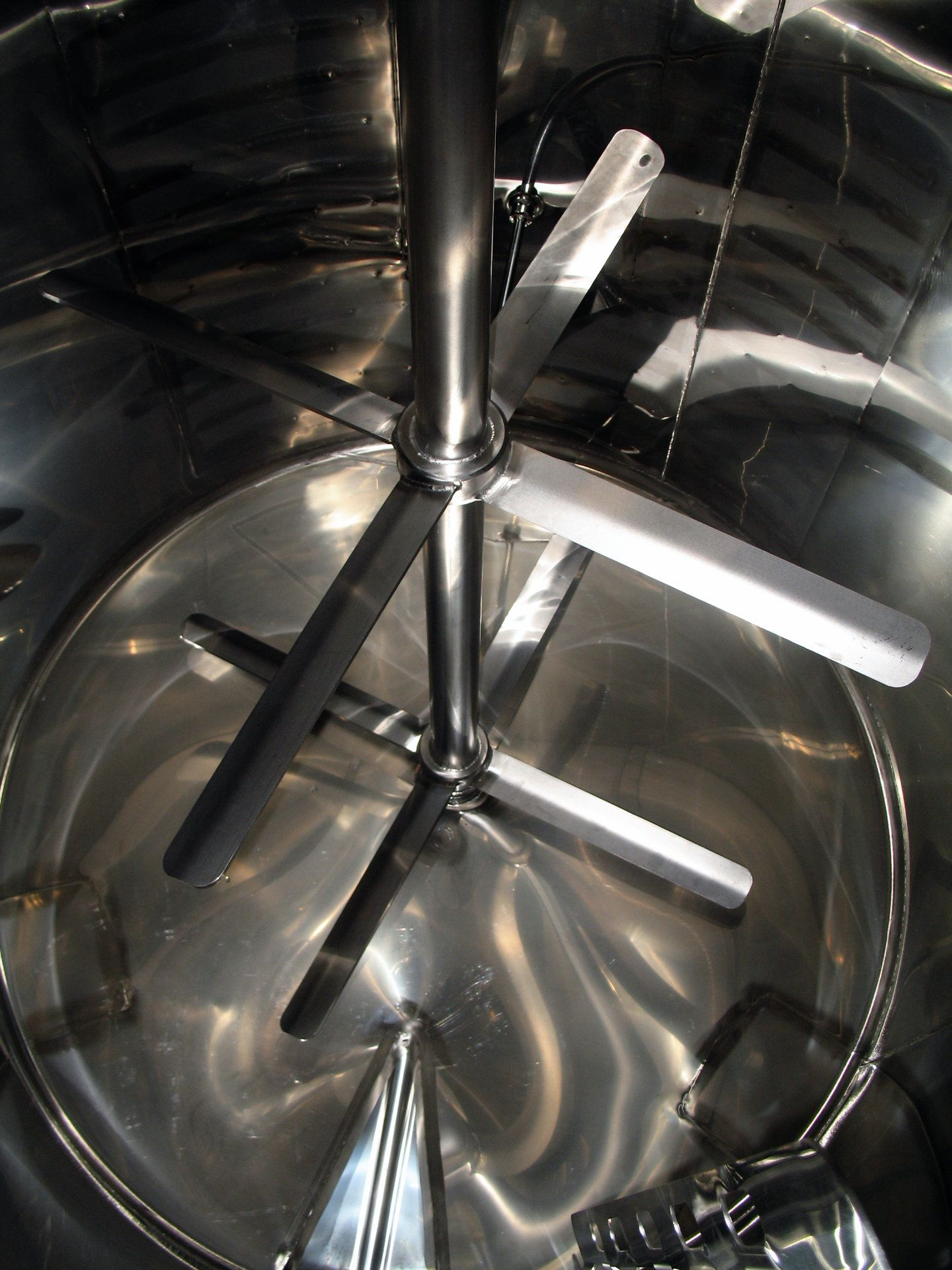
frame mixer tank
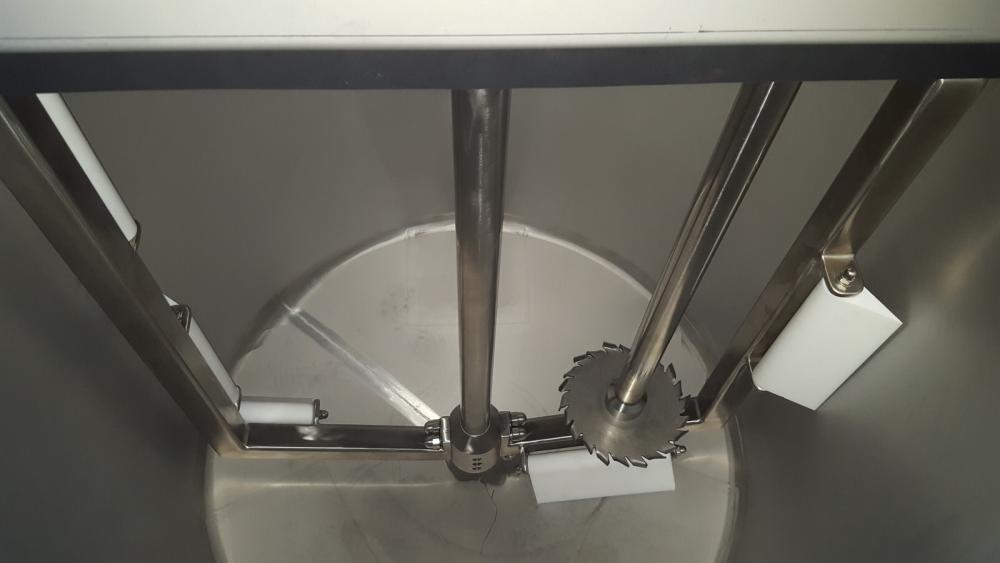
scraper type mixer tank
Paddle mixing tank
According to the classification of processed materials:
1. Liquid liquid mixing tank
A liquid-liquid mixing tank is a device specifically designed for mixing, dissolving, or reacting two or more liquids.
Such tanks are usually equipped with high-speed mixing devices and low angle mixing blades to ensure uniform mixing and good stability.
2. Solid liquid mixing tank
Solid liquid mixing tanks are suitable for mixing solid particles or powders with liquids. The tank is usually equipped with larger mixing blades and a low-speed mixing system, allowing solids to be fully dispersed and suspended in the liquid without settling.
Classified by function
1. Reactor
A reaction kettle is a stirred tank with heating, cooling, and sealing functions, commonly used in chemical, pharmaceutical, and food reaction processes. The inner wall is usually made of high-quality stainless steel material, which has good corrosion resistance and airtightness to ensure the safety and stability of chemical reactions.
Emulsification tanks are mainly used for processes such as oil-water mixing and emulsion preparation, and are commonly used in the production of dairy products, cosmetics, and food sauces. Equipment is usually equipped with high-speed emulsifying heads or shearing devices, which can quickly crush droplets and form stable and uniform emulsions.
3. Homogenization tank
Homogenization tanks are used to refine material particles or droplets, making their distribution more uniform, and are widely used in the production of products such as milk, juice, and sauces. It usually uses a high-shear mixing system or a homogenization pump, which can effectively improve the product's taste and stability.
4. Dispersion tank
Dispersion cans are used to disperse solid powders or pigments into liquids and are suitable for industries such as beverages, cosmetics, and coatings. It disperses materials quickly and without clumping through high-speed stirring or vortex shearing.
Conclusion
Understanding Stainless Steel Mixing Tanks components, operation, and types can help you choose the right tank for your process and improve production outcomes.