Phone: +86-13816327892   E-mail: vonfo@ksvonfo.com
Home » News
  • Common Pasteurizer Problems and Solutions

    2026-10-12

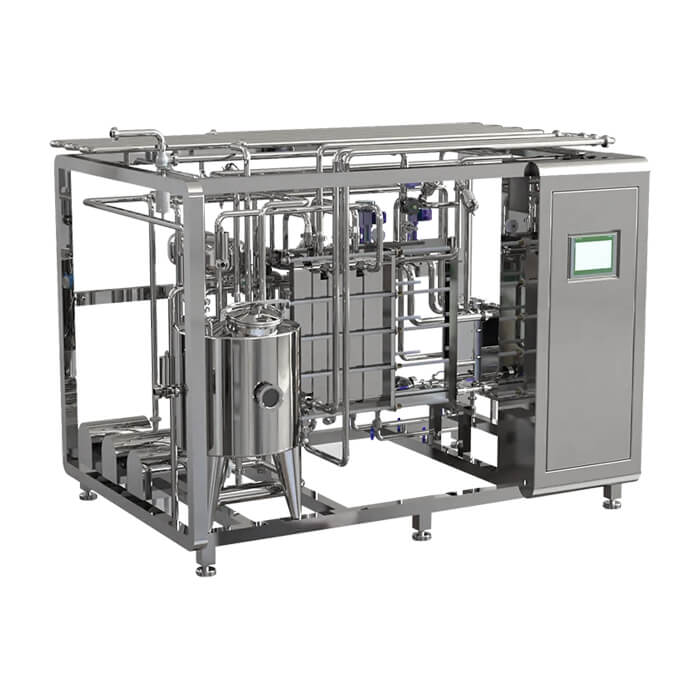
    Pasteurizers are critical for heat-treating liquid foods. Abnormalities in temperature, flow, pressure, cooling, or cleaning can cause incomplete pasteurization and food safety risks. When issues arise, verify process parameters first, then troubleshoot from simple to complex. Before inspection, stop feed, shut off utilities, and release pressure. Never disassemble under pressure, heat, or power, and never bypass alarms or safety interlocks. Read More
  • What Information Is Needed Before Designing A Milk Powder Production Line?

    2026-10-10

    The design of a milk powder production line does not begin with the selection of equipment models, but rather with the confirmation of project parameters. Before contacting a supplier, the client should prepare at least the following: • Product and formulation specifications • Technical standards for the finished product • Raw material test reports • Production capacity and operating schedule • Raw material delivery plan • Scope of supply for the production line • Utility requirements • Factory and site details • Packaging and warehousing requirements • Target market regulations • Automation and cleaning requirements • Budget and production launch schedule • Performance acceptance criteria The more accurate this information is, the more reliable the equipment configuration, investment budget, and project schedule will be. If key information has not yet been determined, steps such as product definition, raw material testing, and confirmation of project parameters should Read More
  • How To Upgrade An Existing Milk Powder Production Line

    2026-09-20

    The correct sequence for upgrading an existing milk powder production line is: define upgrade objectives, establish production baselines, identify line-wide bottlenecks, select the appropriate modification strategy, verify compatibility between new and old systems, formulate a production shutdown plan, and finally conduct acceptance testing based on actual production results. The most important principle is to avoid starting with equipment procurement or basing investment decisions on the rated capacity of individual machines. Only by first identifying the specific factors limiting the output of qualified finished products, energy efficiency, or quality—and then implementing upgrades with clearly defined acceptance criteria—can a predictable return on investment be achieved. Read More
  • How to Build a Milk Powder Manufacturing Plant: From Project Planning to Production

    2026-09-20

    If you are preparing to build a milk powder plant, the project should proceed in the following sequence: requirements confirmation, process design, facility planning, utility system design, supplier evaluation, detailed design, equipment manufacturing, facility construction, equipment installation, system commissioning, raw material trial production, performance acceptance, and full-scale production. Clear documentation, data, and confirmation results should be generated at each stage. Do not rush into the next stage before the current one is complete. Ultimately, what you need is not merely a set of equipment capable of starting up, but a complete production line that—using specified raw materials—can consistently produce milk powder meeting quality standards while achieving target output, energy consumption, and product recovery rates. Read More
  • What Systems Are Included In A Complete Milk Powder Production Line?

    2026-09-14

    This article systematically elaborates on the composition and configuration logic of a complete milk powder production line. It points out that the production line is not merely an assembly of individual equipment but a continuous operation system composed of four major subsystems: standardized processing, concentration and drying, finished product packaging, and cleaning and control. The standardized system includes raw material reception, milk purification and separation, ingredient mixing, and sterilization and homogenization, aiming to provide stable liquid materials. The concentration and drying system (encompassing evaporation, atomization, spray drying, fluidized cooling, and powder recovery) is the core of the production line, while the powder handling and packaging system ensures finished product quality. The article emphasizes that different products (such as skimmed, whole, modified, instant, and infant formula) have varying system requirements, and the integrity of the prod Read More
  • Spray Dryer Vs Freeze Dryer

    2026-09-04

    Both spray drying and freeze-drying can be used to dehydrate dairy products, yet they serve different production objectives. For mass-market products such as whole milk powder, skimmed milk powder, and infant formula, spray drying is generally the more rational industrial choice due to its continuous production capabilities, high processing efficiency, and mature powder control technologies. Freeze-drying offers advantages primarily in low-temperature dehydration and the preservation of heat-sensitive components and product structures; however, its long production cycles, limited throughput, and high processing costs make it better suited for high-value, small-batch, or specialty dairy products. Read More
  • How To Choose A Milk Powder Production Line Manufacturer

    2026-09-02

    A suitable manufacturer should be able to develop a comprehensive solution tailored to your specific products, production capacity, quality standards, and facility conditions, ultimately ensuring the line achieves its design capacity and operates stably. When comparing different suppliers, it is advisable to align the technical and delivery scopes before comparing prices. This approach helps avoid the higher additional investments and operational risks that can arise during project implementation due to initially low price quotes. Read More
  • How Much Does A Milk Powder Production Line Cost?

    2026-09-01

    This article mainly introduces the costs of large, medium, and small-scale milk powder production lines, the differences and characteristics between production lines of different scales, and how to reduce investment in milk powder production lines in the future Read More
  • Milk Powder Production Process Explained From Fresh Milk To Milk Powder

    2026-08-24

    Milk powder production is a complex process comprising multiple operational steps. From raw milk reception through filtration, standardization, pasteurization, concentration, and spray drying to final packaging, every stage impacts the quality of the end product. Among these, spray drying, concentration, and process control are critical factors determining both product quality and production efficiency. Understanding the complete milk powder production workflow enables companies to better plan their manufacturing processes and select solutions tailored to their specific needs. Read More
  • Yogurt production and the industrial yogurt manufacturing process

    2026-07-22

    This paper systematically introduces the complete process of industrial yoghurt production, covering six core steps from raw material acceptance, standardization, homogenization, sterilization, fermentation to filling and cold storage. It emphasizes the strict requirements of industrial production compared with traditional production in terms of microbial control, accurate temperature management and health standards, aiming to provide technical reference for large-scale, continuous production of stable and safe yoghurt products. Read More
  • Milk Powder Production Line Design: Six Core Dimensions—Capacity, Process, Energy Consumption, Hygiene, Automation, And Product Type.

    2026-07-03

    This article systematically elaborates on the six core dimensions of milk powder production line design — capacity, process technology, energy consumption, hygiene, automation, and product type. It points out that designing a milk powder production line is a complex system engineering task that requires achieving an optimal balance among multiple often-conflicting factors. Capacity determines equipment specifications; the process route differs between whole milk powder and skim milk powder; energy optimization (especially in evaporation and drying stages) directly impacts operating costs; hygiene design is an uncompromising safety benchmark; automation level affects product consistency and labor efficiency; and product type serves as the starting point for the entire design. The article also compares whole milk powder and skim milk powder in terms of fat content, process flow, yield, and target markets, providing a professional reference for project planning. Read More
  • Total 9 pages  Go to Page
  • Go
NO.1301 Fengxing Road, Huaqiao Town, Kunshan City, Jiangsu Province.
+86-18602119362 (Cell/WhatsApp)
+86-13816327892 (Cell/WhatsApp)

SUBSCRIBE

Sign up for our mailing list to get latest updates and offers.

PRODUCTS

CONTACT US
Contact us
Copyright © Kunshan vonfo machinery co.,ltd. All Rights Reserved.