Choosing a pasteurizer is critical to your business
In the food and beverage processing industry, product safety, compliance and stable production are the core of sustainable enterprise growth. Pasteurizer is the key equipment connecting these key targets. Whether you are engaged in dairy processing, fruit juice beverages, ice cream mixtures, or soy sauce and functional beverages, selecting the right pasteurization equipment can have a direct impact on productivity, brand reputation, and profitability.
Ensure food safety and reduce microbial risks
Food safety has always been a top concern for consumers and regulators. Untreated liquid food products are susceptible to the development of pathogens such as Salmonella, Escherichia coli, and Listeria.
Key Value of Using Pasteurizer:
Effectively inactivates harmful microbes without destroying nutrients
Maintain protein stability and avoid delamination or condensation
Meet HACCP, ISO22000 and other system requirements
For high-risk products such as dairy products, fresh juices and ice cream base materials, pasteurization is not only a quality control, but also a basic threshold to enter the market.
✅ Extending the shelf life of products and reducing waste and loss
Through accurate heating and cooling curves, pasteurization equipment significantly reduces the number of colonies, thereby improving product shelf life.
The resulting business advantages include:
Longer sales cycle to expand distribution radius
Controllable inventory, reduced scrap rate and raw material loss
Facilitate the development of merchant supermarkets, e-commerce and export channels
For the low margin liquid food industry, a 1% loss reduction is a net gain.
✅ Help enterprises meet regulations and market access requirements
Bactericidal treatments are well defined in different countries and industries, for example in Europe where milk must reach the standard of 72 – 75 ° C for 15 seconds.
Pasteurizer can help companies:
Quickly pass food regulatory review
Meet 3A, EHEDG and FDA health design requirements
Provide temperature logging and data traceability support
Without compliant equipment means no access to higher value markets.
✅ Improve product consistency and brand reputation
Consumers are increasingly sensitive to the consistency of product taste, texture and experience.
Pasteurization equipment is realized through automatic control:
Stable discharge temperature and sterilization intensity (PU value)
Reduce fluctuation caused by manual adjustment
Maintain color, flavour and nutrients
A highly consistent product results in:
Higher repurchase rate
Greater brand trust
Significantly reduced market differential
✅ Reduce long-term operation cost and improve production efficiency
Many companies misinterpret that pasteurization machines are just expensive to procure, but in reality they can significantly reduce long-term spending.
Sources of savings include:
Heat recovery system reduces steam and cooling water consumption
Automatic CIP cleaning reduces labor costs
Stable operation of equipment reduces downtime
Modular upgrades extend life
In the long term, the choice of high-efficiency pasteurization equipment can significantly improve the return on total cost of ownership (TCO).
✅ Support product expansion and business growth
The modern pasteurizer is flexible in configuration and can adapt to different production requirements.
The scope of application includes:
Milk and yogurt base
Juices and botanical beverages
Ice cream mix
Tea and coffee liquid
Egg products, sauce, functional nutraceuticals
Equipment support for future expansion means:
No need to put the whole production line into operation again
Faster launch of new products to capture the market
Pasteurization Equipment Type
Different pasteurization machines have different functions and functions. Understand the advantages and limitations of each type of pasteurization machine, so as to better help you to select the proper machine that meets your capacity and budget.
1、 Classification of pasteurizers
I. By construction of pasteurizer types:
1. Plate pasteurizer
As the name implies, the main body of plate-type pasteurizer adopts plate-type heat exchanger, so it is called plate-type pasteurizer.
2. Tubular pasteurization machine
Tubular pasteurizer, as the name implies, uses tubular heat exchanger for its host, so it is called tubular pasteurizer.
3. Scraper pasteurizer
The main heat exchanger of the scraper pasteurizer consists of a shell and a rotor scraper, and the rotor consists of a shaft and a removable scraper.
4. Tunnel pasteurization machine
Tunnel pasteurization machine is mainly used for pasteurization of filled products. It is applicable to the secondary sterilization of packed food such as cans, glass bottles and heat-resistant PET bottles. Configure preheating, sterilization, precooling, cooling and drying according to product characteristics. Commonly used for juice beverages, warming of CSD products, and warming of tin and glass beer.
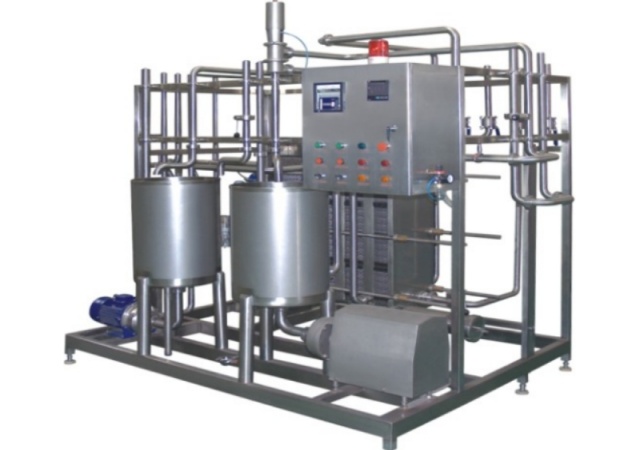
Plate pasteurizer
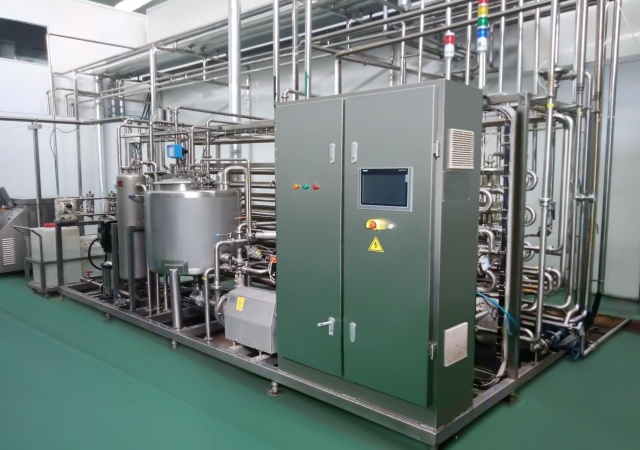
Tubular pasteurization machine
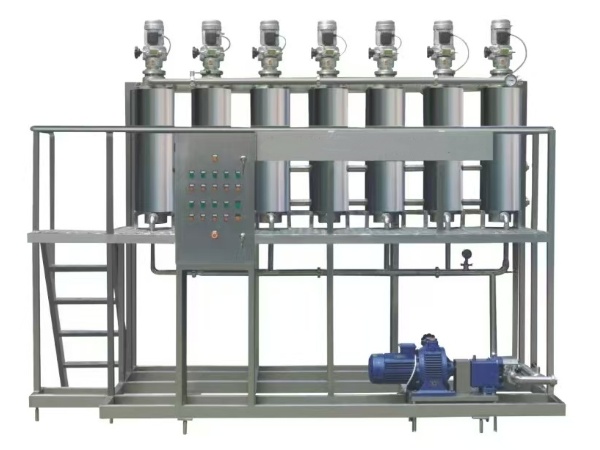
Scraper pasteurizer
II. By field of application of pasteurizer:
1. Milk pasteurization machine
The pasteurization machine of pasteurized milk can be either tube-type or plate-type, which can be selected according to the specific needs of the user.
2. NFC fruit juice pasteurizer
NFC fruit juice is one of the high-end drinks in the current market, fully retaining the flavor and nutrition of fruit juice. At present, the filling forms of NFC fruit juice include aseptic cold filling and low-temperature filling. No cold chain is required for the aseptic cold-filled NFC fruit juice, which can be stored at room temperature and has a long shelf life. UHT sterilization process is adopted. Low-temperature filling of NFC fruit juice is similar to pasteurized milk. Low-temperature filling, low-temperature storage and short shelf life.
3. Jam pasteurization machine
Because of the high viscosity and poor mobility of the jam, tubular or tubular pasteurization machines are commonly used. Our tubular pasteurizer is widely used in fruit production users around the world, including tomato sauce plants, straw jam plants, and mango pulp plants.
4. Fruit pulp pasteurizer
The fruit pulp is usually the product obtained by refining and pulping after the fruit is crushed and concentrated. Because of its high viscosity and poor mobility, it is usually sterilized with a scraper pasteurizer.
III. Classified by sterilization process:
1. Pasteurization machine
Use low temperature long time sterilization (65 - 75 ℃ for 30 minutes) or medium and high temperature short time sterilization (80 - 85 ℃ for 15 - 30 seconds). The primary objective is to kill pathogens while maximizing the retention of active nutrients (e.g., lactoferrin, immunoglobulin) and flavour in milk.
2. Ultrapasteurization machine
It is usually used for the production of yogurt, using a higher temperature sterilization process (typically at 95 ° C for 300 seconds). The bactericidal intensity is higher than that of pasteurized milk, but lower than that of normal temperature UHT milk. Mainly used in the production of yogurt. The milk needs to be sterilized before fermentation and maintained at 95 ℃ for 5 minutes to stabilize the casein in the milk, which is beneficial to the fermentation of milk and the stability of yogurt.
3. High temperature sterilizer (HTST)
Use a higher temperature sterilization process (typically 121-125 ° C for 15-30 seconds), slightly lower than conventional UHT processes (135-150 ° C). This sterilization process is usually applied to fruit juice beverages, acid conditioned milk beverages, acid conditioned tea beverages and other acidic products. The shelf life of the product is then ensured by hot filling and secondary sterilization cooling processes.
4. UHT(Ultra-High Temperature Instantaneous Sterilization)
UHT is widely used in milk, fruit juice and other aseptic filling products. A high temperature transient sterilization process is commonly used (typically holding for 2-5 seconds at 135-145 ° C). This sterilization process not only thoroughly kill the bacteria in the product, but also meet the long-term preservation of the product. Generally, aseptic filling process shall be combined. Currently, aseptic filling machines in the market include aseptic PET filling machine, Tetra Pak aseptic filling machine, BIB aseptic filling machine, etc.
Comparison Table: Pasteurization Systems
Features | Pasteurizer system | HTST System | UHT System | Water bath sterilizer system |
Processing temperature | 65-75℃/80-85℃
| 121-125℃ |
135-145 ° C | 110-135℃ |
Insulation time | 30mins /15-30s
| 15-30s
| 2-5s
| 20-60min(base on product) |
Production capacity range | Small to medium | 1,000-30,000 L/H | 2,000-50,000L/H | Small to medium |
Energy efficiency | Moderate | High | High | Low |
Product shelf life | refrigeration7-12days | refrigeration7-12days | Room tem 6-12days | Store at room temperature for several months (depending on packaging). |
Initial investment | Low
| Medium-high
| High | Medium-high
|
Adaptability to different products | Suitable for products with low viscosity and good heat sensitivity | Highly flexible and heat-sensitive product friendly | suitable for room-temperature dairy products and commercial aseptic foods; | for secondary sterilization of bottled, canned, and bagged finished products |
Operating costs | Low | Medium | Medium-high
| High |
Optimal use | Refrigerated liquid foods | Refrigerated liquid foods | Room temperature liquid food | canned or bagged at room temperature. |
Based on the above classification, users basically know how to purchase pasteurizer. However, in some lines, both plate and tube pasteurizers are available, so how do you choose? Then, for the above situation, please make a selection based on the following factors:
Factors to be considered when selecting equipment: Tubular or plate pasteurizer: which one to choose?
1. Material characteristics;
Generally, the plate pasteurizer is used for products with low viscosity value and good mobility, such as milk, fruit juice drinks, etc. Tubular pasteurizer is used for products with high viscosity and good mobility, such as tomato sauces, fruit pulp, jam, etc. Scraper pasteurizer is used for products with higher viscosity value and poor mobility, such as a part of concentrated fruit pulp, etc. At the same time, tubular pasteurizer is widely used for products with granules, and it is generally recommended that the granule size is ≤ 5mm
2. Duty Cycle:
What is the duty cycle? The duty cycle is the single continuous duty time of the pasteurizer. Generally, we recommend CIP cycle cleaning for plate-type pasteurizer every 4-5 hours of operation, so as to ensure sufficient cleanliness inside the sterilizer and maintain high heat exchange effect. However, with the development of mechanical manufacturing technology, the surface cleanliness of plate becomes higher and higher, and the duty cycle of plate pasteurizer is also extended. While the working cycle of tubular pasteurizer exceeds 10 hours, there is no need to shut down for cleaning.
3. Maintenance cost;
Either plate pasteurizer or tube pasteurizer has some wearing parts, mainly including sealing ring and adhesive strip. Generally, we recommend replacing the adhesive strip of the plate pasteurizer once a year, which increases the maintenance cost of the machine compared with the tubular pasteurizer.
4. Floor area of the machine;
Generally, plate and tube pasteurizers of the same capacity have a larger floor area for the tube type, and if your shop space is limited, plate pasteurizers are preferred.
5. Capacity of production line;
The capacity of plate-type pasteurizer tends to be small and medium-sized. Our company has designed and manufactured plate-type pasteurizer from 500L/h to 20000L/h. However, tubular pasteurizers are preferred for medium and large production lines, such as 3000L/h-35000L/h. Combined with Article 1 above, if the plate-type pasteurizer is used in a large-capacity production line, the CIP cleaning frequency is high, and the material waste will be greater.
6. Purchase cost of complete machine;
Undoubtedly, under the same degree of automation, the cost of tubular pasteurizer will be far higher than that of plate pasteurizer.
Factors to consider:
Factor | Plate pasteurizer | Tubular pasteurizer |
Material viscosity | Used for clarifying liquids (soft drinks, liquid beverages) and juices
| Processing viscous liquids (citrus juice containing particles, fruit puree, tomato sauce). |
Work cycle | 4-5h | More than 10h |
Maintenance cost | high
| Low |
Equipment footprint | small | large
|
Capacity | Small and medium capacity | Medium and large capacity |
Procurement costs | low | high |
Mistakes to Avoid when Purchasing Pasteurizer
❌ Error 1: Focus on price only and ignore total cost
Many buyers only compare equipment offers and ignore long-term operating costs.
Risks include:
High energy consumption and steam consumption
Shutdown due to frequent maintenance
Short service life
Parts are not replaceable or need to be imported waiting
✅ Methods to avoid:
Evaluation of total cost of ownership (TCO): energy consumption+maintenance+spare parts+production loss
Preferred energy recovery design (e.g. heat recovery plate pasteurization machine)
Ask the supplier to provide energy consumption data and real cases
❌ Error 2: Selection not based on material characteristics
Different products require different sterilization methods and parameters.
Common Mistakes:
Handling Granular or High-Viscosity Materials with Plain Plates
Wrong heat exchange structure for ice cream mix
An unsuitable tubular system is used for granular beverages
✅ Methods to avoid:
Confirmation before type selection:
Material type (homogeneous/containing particles/high viscosity/with fiber)
Thermal Susceptibility and Protein Stability
Final temperature and cooling requirements
Flow range and future expansion
❌ Error 3: Ignorance of hygiene and certification standards
The food industry must comply with regulations or cannot pass the audit.
Note:
Whether the design meets the requirements of 3A/EHEDG/FDA
Is internal contact surface Ra ≤ 0.8 μ m
CIP/SIP cleaning capacity
Welds inspected and polished
✅ Methods to avoid:
Request for Material Certificates (e.g. 316L MTC 3.1)
Hygienic design drawings and cleaning verification required
❌ Error 4: Automation and control requirements not confirmed
Too simple or too complex increases the risk.
Common problems:
Manual temperature adjustment, large fluctuation
No alarm or data logging
Unable to communicate with existing production line
✅ Methods to avoid:
Confirm that:
Control mode: PLC/touch screen/automatic temperature control
Data logging (HACCP, traceability)
Protocol with production line: Modbus/Ethernet/Profibus
❌ Error 5: Ignoring capacity matching and future expansion
Only select according to the current demand, and the later expansion cost is higher.
✅ Methods to avoid:
Define capacity range (Min – Max)
Optional Upgradeable Module Design
Consider future new products (e.g., from milk to yogurt or ice cream)
❌ Error 6: Failure to verify supplier strength and after-sales service
The equipment purchased is not as reliable as the service. If the manufacturer is not reliable, the machine is visible but unusable ;wasting time and energy, it will not pay off.
✅ Recommended Checks:
Successful cases Industry and country, professional team
Whether installation, commissioning and training include
Spare Parts Delivery and Warranty Policy
Whether it supports remote diagnosis
✅ conclusion
When purchasing pasteurization equipment, proper selection is more important than low price. Focusing on material characteristics, energy consumption, hygiene standards, automation capabilities, and vendor support can dramatically reduce production risks and improve long-term revenues.
Conclusion and Final Recommendations
Choosing the right pasteurization machine is not simply selecting a piece of equipment, but a systematic decision involving product characteristics, process parameters, investment budget, energy efficiency, and future expansion needs. Whether you are producing milk, juice, ice cream mixes, fruit purees, sauces, or functional beverages, correct equipment selection will directly affect food safety, production line efficiency, final flavor quality, and long-term operating costs.
In practical applications, you not only need to understand the applicable scope of different structures such as plate, tube, scraper, and tunnel types, but also need to assess key factors such as production rhythm, material viscosity, cleaning requirements, floor space, and degree of automation. At the same time, choosing an equipment supplier with strong technical capabilities and comprehensive after-sales service will help you reduce risks during project implementation, commissioning, and subsequent maintenance, ensuring the long-term stable operation of your production line.
With years of accumulated process experience and industry expertise, Wanaifu Machinery Co., Ltd. has always focused on the research, design, and manufacturing of pasteurization machines, providing users with complete solutions from scheme planning and equipment selection to installation and commissioning. Whether you are building a new factory or upgrading a production line, we can customize the most suitable sterilization process and equipment configuration for you based on your product characteristics and capacity requirements, helping you improve production efficiency, optimize energy consumption, and ensure your products achieve stable market competitiveness.
Choosing the right pasteurization machine lays the foundation for a stable, efficient, and sustainable development of your production line. Let professional equipment help your business grow.


